
An anxiety attack can feel overwhelming, especially when fear, physical sensations, and racing thoughts appear suddenly. You may experience a pounding heart, shortness of breath, muscle tension, dizziness, restlessness, or an intense sense that something is wrong. Although these symptoms can feel frightening, learning practical techniques can help you manage the experience and regain a sense of control.
Anxiety activates the body’s stress response. When your brain perceives a threat, your body prepares to respond, even when there is no immediate physical danger. This can cause your heart rate and breathing to change while your muscles become tense.
During an anxiety attack, you may notice:
Recognizing these symptoms can help you understand what you are experiencing rather than becoming increasingly frightened by each physical sensation.
When anxiety becomes intense, focus on simple actions rather than trying to eliminate every symptom immediately. Move to a comfortable, quieter environment if possible and remind yourself to focus on the present moment.
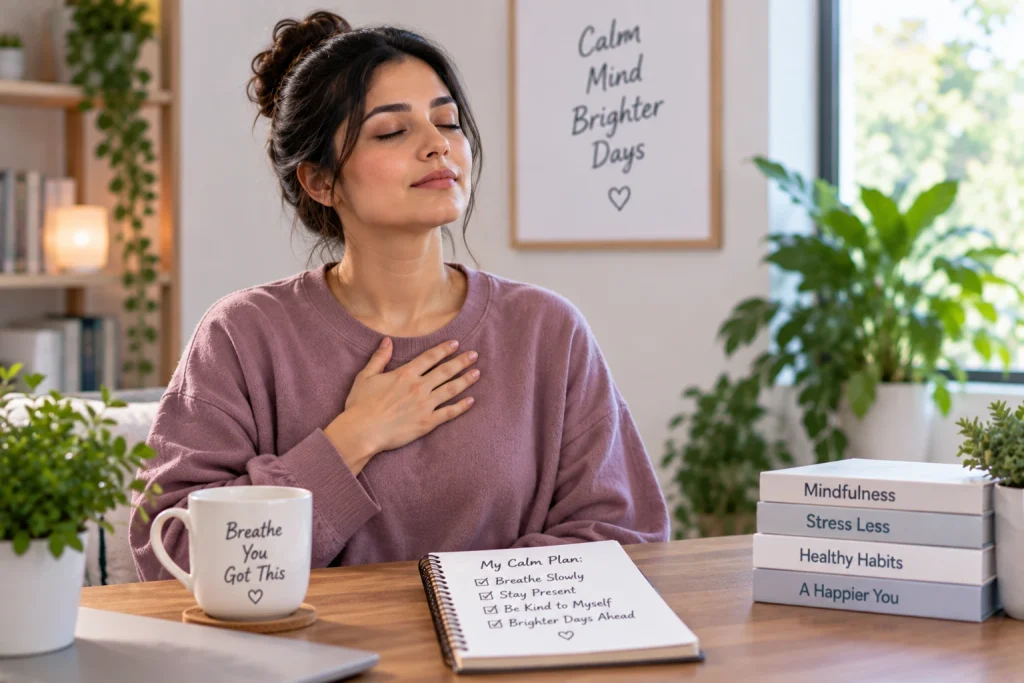
Slow, controlled breathing can be useful. Instead of taking rapid, shallow breaths, breathe slowly and comfortably. Relax your shoulders and jaw, and allow your body to gradually settle.
Grounding can also redirect your attention away from anxious thoughts. Look around and identify things you can see, hear, and physically feel. This can help shift your attention from perceived danger to your immediate surroundings.
Anxiety often involves thoughts about what might happen next. Trying to force these thoughts away can sometimes make them more noticeable. Instead, acknowledge the thought without automatically accepting it as a fact.
Ask yourself whether there is evidence supporting the worry and whether you may be imagining the worst possible outcome. You can then redirect your attention toward something practical and manageable.
Developing these skills takes practice. Using them regularly, rather than only during an anxiety attack, can make them easier to access when symptoms become intense.
Managing anxiety between episodes is also important. Pay attention to habits and circumstances that may increase stress or make symptoms harder to manage. Maintaining consistent sleep, making time for relaxation, staying physically active, and using healthy stress-management strategies may support overall well-being.
It can also help to identify situations, thoughts, or physical sensations that tend to precede an anxiety episode. Keeping notes about symptoms and circumstances can reveal patterns that may otherwise be difficult to recognize.
If anxiety continues to interfere with daily responsibilities or relationships, professional support can provide additional strategies.
Consider speaking with a mental health professional when anxiety attacks become frequent, difficult to manage, or cause you to avoid normal activities. Professional care may also be helpful when persistent worry, physical symptoms, or sleep problems affect your quality of life.
Therapy can help you understand anxious thought patterns, recognize triggers, and develop healthier coping skills. For people with more severe symptoms, psychiatric care and medication management may also be considered as part of an individualized treatment plan.
Our Team can provide support for understanding anxiety symptoms and developing practical approaches to manage worry, physical discomfort, and emotional distress. Treatment may include therapy, psychiatric care, medication management, or continued support based on individual needs.
Learning how to control anxiety attacks starts with recognizing what is happening and responding with practical strategies. Slow breathing, grounding techniques, present-focused thinking, and healthy routines can help you manage anxious feelings and reduce their impact on daily life.
Uriel Behavioral Wellness Inc offers therapy, psychiatric care and medication management, child and adolescent therapy, and ongoing support for established clients. With personalized professional support, you can better understand your anxiety and build effective strategies for managing symptoms when they arise.
About the Author
Tope Onikeku

September 15, 2026
Explore More Blogs
Discover other insightful and engaging content from our blog
You deserve care that
sees you, hears you, and
walks with you.